THE REFITTING ROOM · GUIDES
What to Do With Your Clothes After Rapid Weight Loss
A practical plan for deciding what to wear now, alter, wait on, replace, or let go while your size is changing quickly.
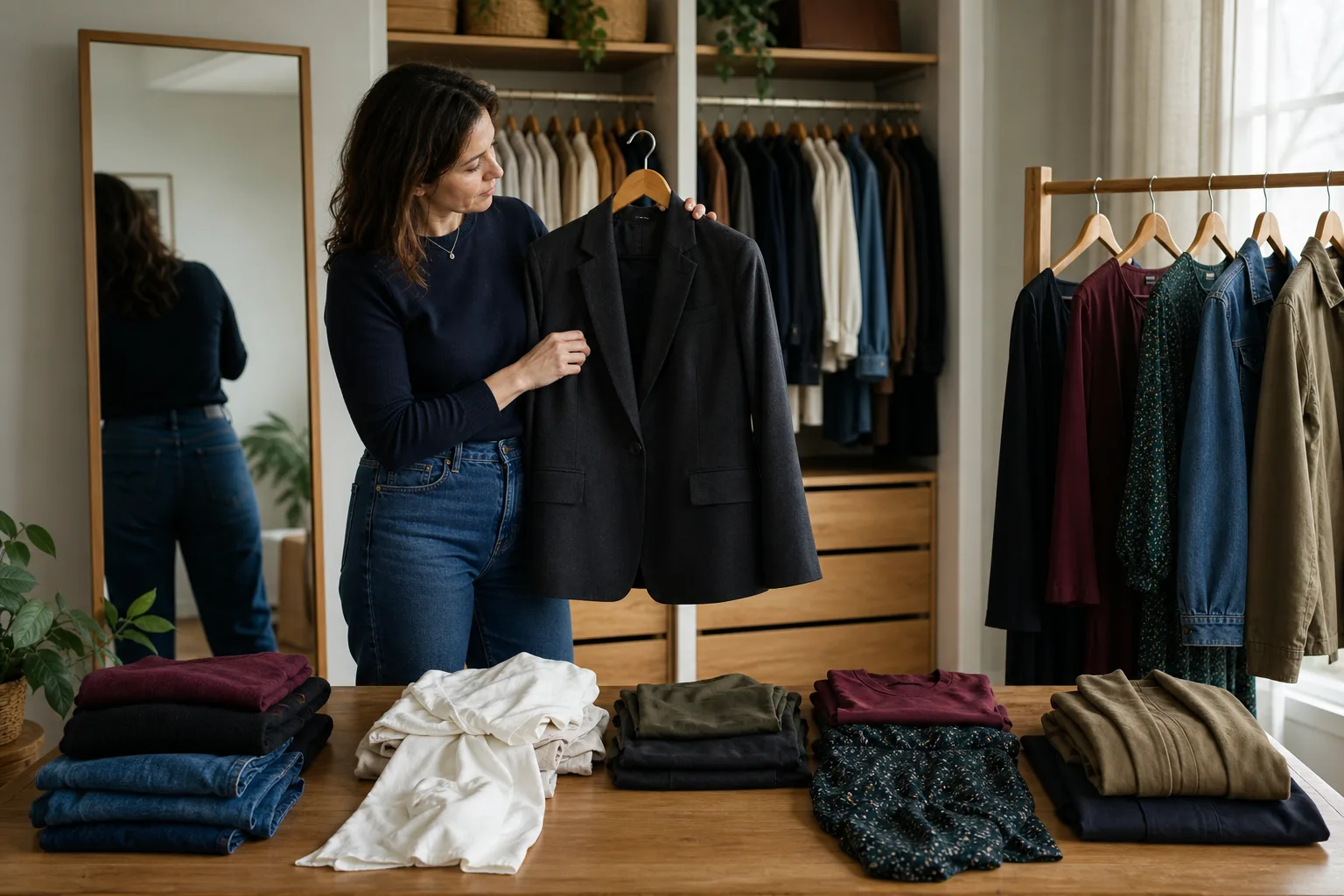
Build a 30-day working wardrobe first
Your first job is not to rebuild the whole closet. Choose the smallest set of clothes that can carry work, errands, weather, and any events over the next month. That working wardrobe gives you something reliable to wear while the rest of the closet is reviewed without urgency.
Rapid body-size change creates a real clothing problem, not a reason to buy indiscriminately. PwC's 2026 consumer research reports that 73% of surveyed GLP-1 users experienced a meaningful clothing-size change, while apparel spending increased after six to eight months. The useful response is a staged plan: solve today's gaps, then spend on tailoring or replacement only when the garment and timing justify it.
Give every garment one of five decisions
Wear now means the piece works well enough for the next month and fills a real need. Alter means it is useful, well made, close enough to fit, and worth more to you than the quote. Wait means the garment deserves work, but changing it now could mean paying twice. Replace means the wardrobe slot matters, but the existing garment cannot reach a good fit at a sensible cost. Let go means the piece no longer serves your life, even if it could be made smaller.
Timing is the whole game
During a rapid size-change phase, spend narrowly: adjust only the daily workhorses you need, add a small number of temporary bridge pieces, and hold the expensive garments until their fit is less volatile. A belt, layer, temporary trouser, or simple styling adjustment can buy useful time without turning an interim size into a full replacement wardrobe.
If your size is still moving and you need outfit-level guidance, use the GLP-1 wardrobe bridge plan to build a small group of clothes that works now.
What tailoring can and can't do
Taking a garment in is often more flexible than letting it out, but every piece has limits. Fabric, seam allowance, lining, shoulder placement, rise, pockets, and the distance from your current fit all affect the result. Wool, cotton, linen, and sturdy denim often offer useful alteration paths. Delicate silk, leather, loose knits, and inexpensive tees need a more cautious cost-and-construction review.
When the shoulders, rise, pockets, or overall proportions would need to be rebuilt, smaller is not automatically better. Use the alter, wait, replace, or let go decision guide for a garment-by-garment review.
Move the safety pile out of the working closet
You do not have to donate every larger garment immediately. Move uncertain pieces into a labeled hold area with a review date instead. That keeps the daily closet useful without forcing an emotional decision before you are ready. The same rule applies to speculative shopping: stop buying for a possible future size until a current wardrobe gap is clear.
Use real quotes instead of universal averages
Price depends on the garment, construction, location, and amount of work. For every serious candidate, record the alteration quote, the cost of an equal-quality replacement, how often you expect to wear it, and whether your fit is still changing. That comparison is more useful than a generic tailoring average.
Illustrative example: if selected alterations total $480, urgent replacement basics total $330, and consignment offsets $140, the immediate wardrobe plan costs $670. Those figures demonstrate the calculation only; they are not promised prices or market averages.
Where to start this week
Pull out the five pieces you would wear tomorrow if they fit. For each one, ask: Do I still want to wear this? Does it solve a current wardrobe need? Can its construction support the change? Is my fit still moving? Then assign one decision: wear now, alter, wait, replace, or let go.
FAQ
Questions about clothes after rapid weight loss
Should I tailor clothes while my weight is still changing?
Only when a garment solves an immediate need and the proposed alteration is limited enough to remain useful. Wait on expensive, complex, or sentimental pieces if another size change could require the work to be repeated.
How many sizes can clothes usually be altered down?
There is no universal number. A size or two can be workable for many garments, but the real limit depends on shoulders, rise, pockets, seams, fabric, and construction. A tailor should review the individual piece before promising the result.
What should I do with expensive clothes that are too big?
Move them out of the working closet, protect them from damage, and review them when your fit is steadier. Their quality may justify tailoring later, but their price alone does not make an early alteration worthwhile.
Is it better to alter or replace clothes after GLP-1 weight loss?
Decide garment by garment. Alter strong, useful, hard-to-replace pieces that are close enough to fit well after tailoring. Replace urgent basics when tailoring would cost nearly as much as a better-fitting version.
Is this medical advice?
No. This guide covers clothing and wardrobe decisions only. Questions about medication, weight change, nutrition, or health belong with a qualified clinician.
Source and scope
Market context: PwC, GLP-1 consumer trends 2026. The source establishes the scale of clothing-size change and apparel spending among surveyed users. The garment recommendations on this page are practical wardrobe guidance from The Refitting Room.
The Refitting Room is a wardrobe service, not a medical provider. Nothing here is medical advice — for anything about your treatment, talk to your clinician. We only ever handle the clothes.