Pieces that can carry this week
Keep a small set of clothes that look intentional today, even if they are not your final size.
Soft layers, adjustable waists, open jackets, simple dresses, pieces that still hold shape
If GLP-1 weight loss has made your clothes feel too big before your closet has caught up, do not rush to tailor everything or replace everything. Build a bridge closet first.

The most expensive mistake is treating a transition size like a final size. When clothes are suddenly too big, the strongest move is to stabilize your daily outfits, hold the valuable pieces, and wait to tailor anything that might need a second round soon.
This is wardrobe planning only. It does not replace medical advice about weight loss, medication, or nutrition.
Sort by timing before you sort by emotion. A piece can be valuable and still not be ready for tailoring this month.
Keep a small set of clothes that look intentional today, even if they are not your final size.
Soft layers, adjustable waists, open jackets, simple dresses, pieces that still hold shape
Use belts, layering, strategic tucks, and one or two temporary purchases to avoid rebuilding your whole closet too early.
Belts, cardigans, ponte pants, transitional denim, tailoring clips for private try-ons
Pause on expensive or complex pieces if your body size is still changing and you do not need them immediately.
Coats, lined dresses, formalwear, investment blazers, sentimental pieces
Once a garment is close enough to your current body, decide whether it deserves tailoring, restyling, preservation, or release.
Favorite jeans, workwear, event clothes, high-quality staples, meaningful garments
A bridge closet is not a full replacement wardrobe. It is the small set of clothes and styling tools that help you look pulled together while you wait for better information about your long-term fit.
Start with work, childcare, errands, events, weather, and anything you must show up for soon. A smaller useful closet beats a large frustrating one.
If you need a blazer, trousers, dress, or coat now, consider a targeted alteration. Wait on pieces that can sit until your fit is less volatile.
A belt, layer, temporary pant, or simple styling change can keep outfits polished while you avoid paying for the same alteration twice.
When your size feels steadier, review the pieces with real value: quality, use, construction, and emotional meaning.
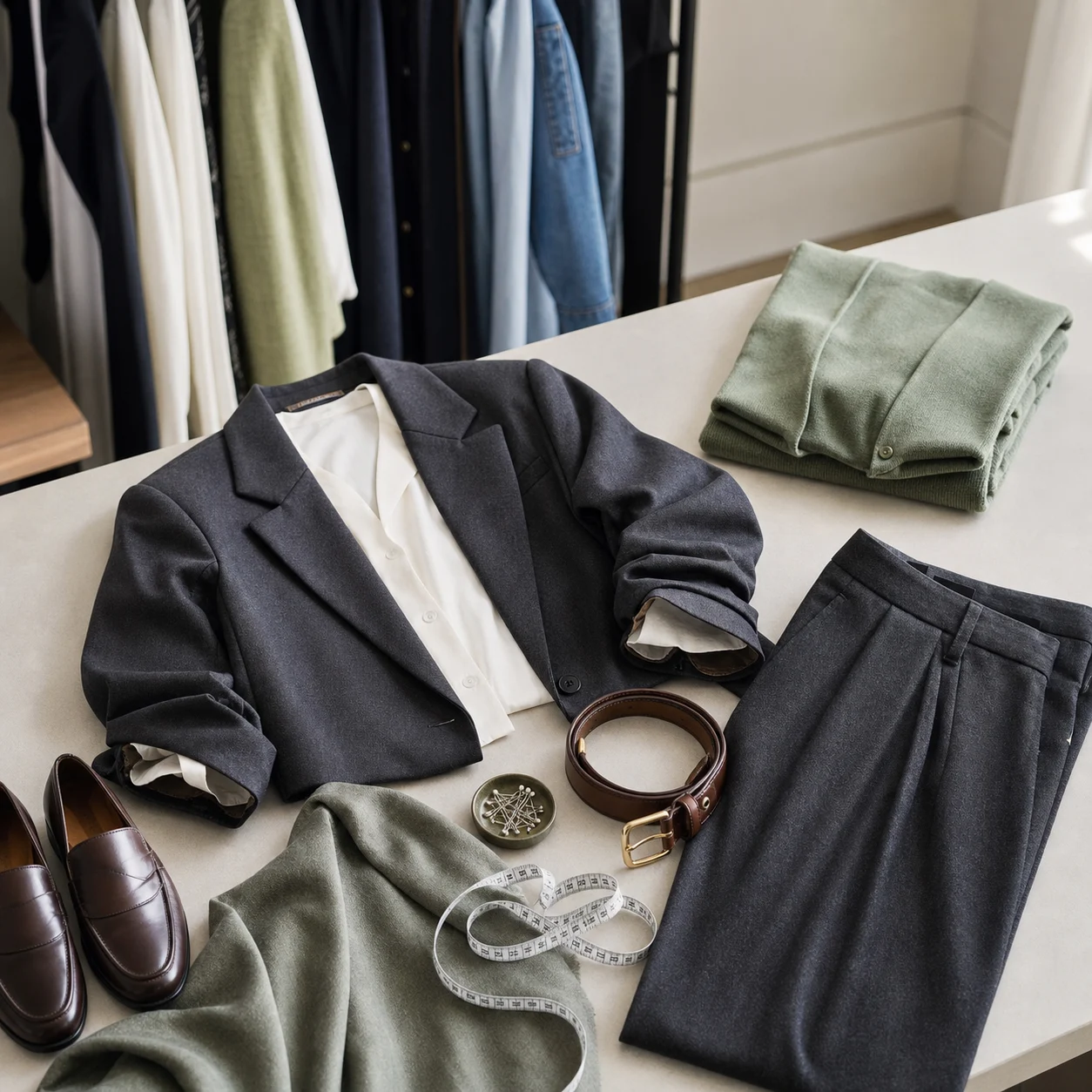
Tailoring is most useful when the garment is close enough to your current body that the result will look intentional. If the shoulders, rise, waist, or proportions are still shifting month to month, waiting can protect both the piece and your budget.
For a deeper garment-by-garment review, use the alter, wait, replace, or let go decision guide.
If the change has already affected most of your closet, continue with the rapid weight-loss wardrobe plan for a 30-day working wardrobe and a staged review of the rest.
This guide is about clothing decisions during body-size change. It is not medical advice.
Your future closet does not need to be entirely new. Once your fit feels less volatile, bring forward the pieces with real value: strong fabric, useful structure, frequent wear, or personal meaning.
The Refitting Room can help separate immediate wardrobe fixes from later alteration candidates, so you do not have to make every decision at once.
Do not spend your whole wardrobe budget on a size that is still passing through.
Sometimes, but only for pieces you need now. If your size is still changing quickly, wait on expensive, complex, or sentimental garments so you do not pay for the same alteration twice.
Build a temporary bridge closet: a few current-fit basics, adjustable pieces, layers, belts, and garments that still hold shape. The goal is to look intentional now without replacing everything.
Buy only what solves an immediate gap while your size is moving. Save larger investment purchases for when your fit needs are more stable and you know what pieces you actually miss.
Save high-quality, structured, meaningful, or hard-to-replace pieces, especially if the fabric is still strong and the shoulders, rise, or main proportions are not too far from your current body.
No. This guide is wardrobe planning only. For medication, weight-loss, nutrition, or health questions, work with your clinician.
Start with the $199 Workwear Transition Plan. We will review 5–7 garments in 60 minutes and give you a clear plan for what to refit now, hold, or replace.
Book the $199 Workwear Transition Plan3 founding spots · Paid upfront to reserve · Alterations and purchases separate